

The Vitträsk Rock Painting
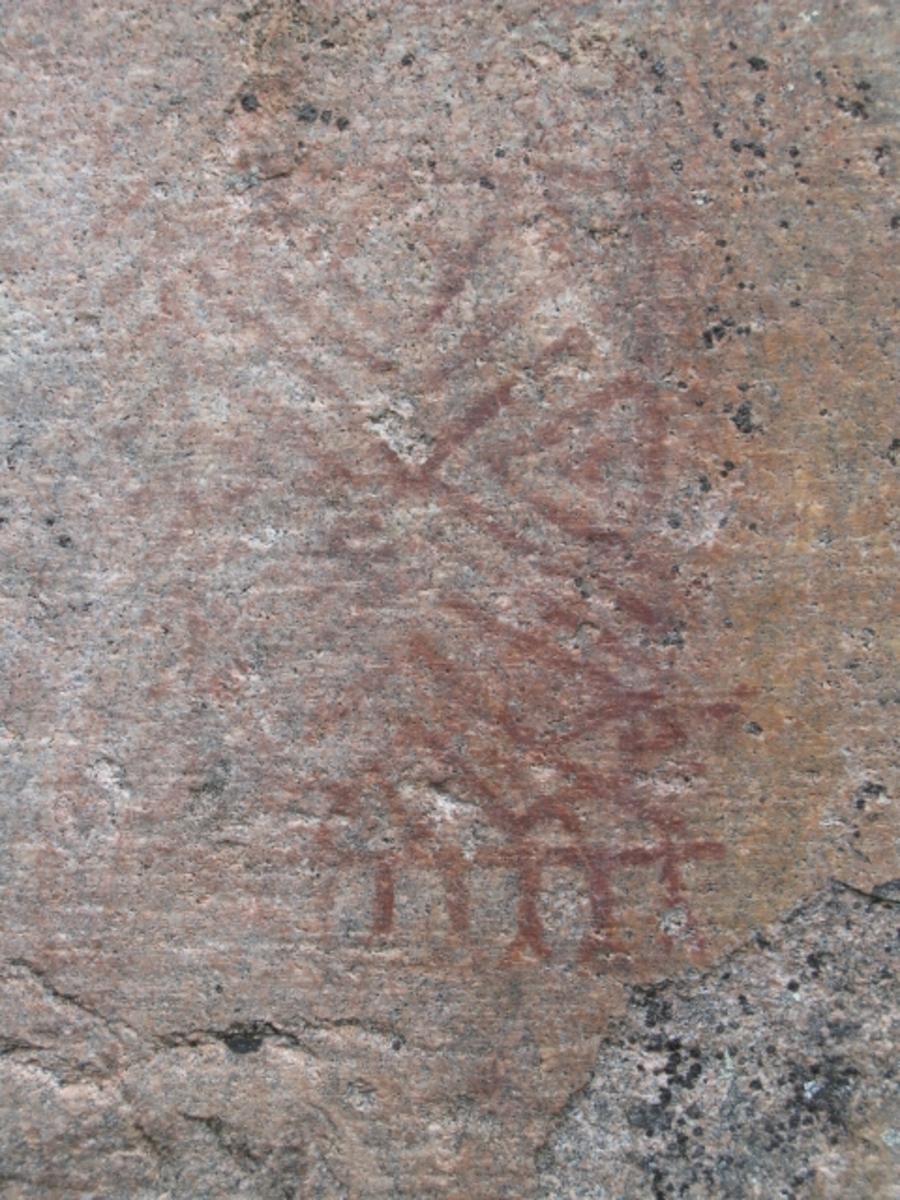
The rock painting at Vitträsk is a small but exceptionally significant piece of Finnish prehistory and, at the same time, one of archaeology’s most fascinating mysteries.
Vitträsk may not be the most spectacular rock painting, but its significance is immense: it was the first rock painting identified in Finland. The discovery was made in 1911, when composer Jean Sibelius noticed the unusual patterns on the rock. This chance discovery sparked research into rock art throughout Finland.
The painting itself is located on a steep cliff by the shore of Lake Vitträsk. Today it sits high above the waterline, but during the Stone Age it was created right near the shoreline—a spot that was easily visible from a boat. This suggests that the painting was significant to passersby, not just to its creators.
What makes Vitträskki special is its unique style. Unlike many other rock paintings in Finland, there are no clear depictions of moose, people, or boats here. Instead, the design consists of diagonal lines, crisscrossing patterns, and irregular traces of red ochre.
One of the most recognizable patterns resembles a rectangular “grid” containing a dense network of lines. This type of geometric representation is rare in Finland and difficult to interpret.
So what do the patterns mean? Researchers do not agree on this. It has been suggested that they could be ritual symbols, some kind of signs, messages, or part of a shamanistic worldview.The Vitträsk rock painting is dated to the Stone Age, likely around 4,000–6,000 years ago. Although it is modest in size and partially worn away, it offers a unique glimpse into the past: a time when people depicted their world on rocks in ways we still do not fully understand.