
Stop Vandalism and the Anti-Graffiti Movement
Graffiti arrived in Finland in the 1980s as part of hip-hop culture. It wasn’t just writing on walls, but an entire visual language: tags, throw-ups, pieces, lettering styles, color combinations, characters, and site-specific visibility. For the artists, graffiti was a way to practice their craft, build a name for themselves, and take over urban space, which was otherwise filled with advertisements, traffic signs, and official signage.
In Helsinki, the status of graffiti changed particularly dramatically in the late 1990s. The city launched the “Stop Töhryille” project in 1998, and it continued until the end of 2008. The project’s goal was to remove graffiti, tags, stickers, and posters from the streetscape as quickly as possible. In practice, this policy meant zero tolerance: unauthorized markings were not distinguished based on artistic quality, technique, or location, but were treated primarily as litter and a public nuisance.
During the “Stop Töhryille” campaign, Helsinki sought to control public spaces through removal, patrols, and surveillance. At the same time, many graffiti artists and supporters felt that the city was not only cracking down on vandalism, but also on youth culture and independent visual expression. The previously more permissive atmosphere changed: in the 1980s, graffiti had been viewed in the media as art and part of hip-hop culture, but during the zero-tolerance era, it became primarily a matter of safety and cleanliness in Helsinki.
The counter-movement was particularly evident in 2008. During the 10th-anniversary seminar of the “Stop Töhry” project, Töhryfest was organized to champion graffiti, street art, and a more open urban culture. Several hundred people participated in the demonstration, and the event brought graffiti policy prominently into the public discourse. Its significance lay not only in the single march itself, but in the fact that graffiti began to be discussed from the perspectives of culture, urban space, and youth expression.
After the project, Helsinki’s stance gradually shifted. The “Stop Graffiti” campaign ended in late 2008, and in 2009, a designated graffiti wall was opened in Suvilahti. It was a symbolically important turning point: the same city that had long sought to remove graffiti from public view entirely began offering spaces for it. The Suvilahti graffiti wall also received the Helsinki Cultural Achievement Award in 2010.
The status of graffiti remains controversial, however. Unauthorized painting is still illegal, but graffiti and street art are now also part of exhibitions, events, workshops, commissioned works, and the visual identity of cities. The “Stop Töhry” campaign went down in history as a phase in which graffiti was sought to be excluded from the realm of art and culture. The counter-movement, in turn, contributed to graffiti being treated as an art form in its own right: a combination of letters, location, movement, risk, the artist’s name, and urban space.

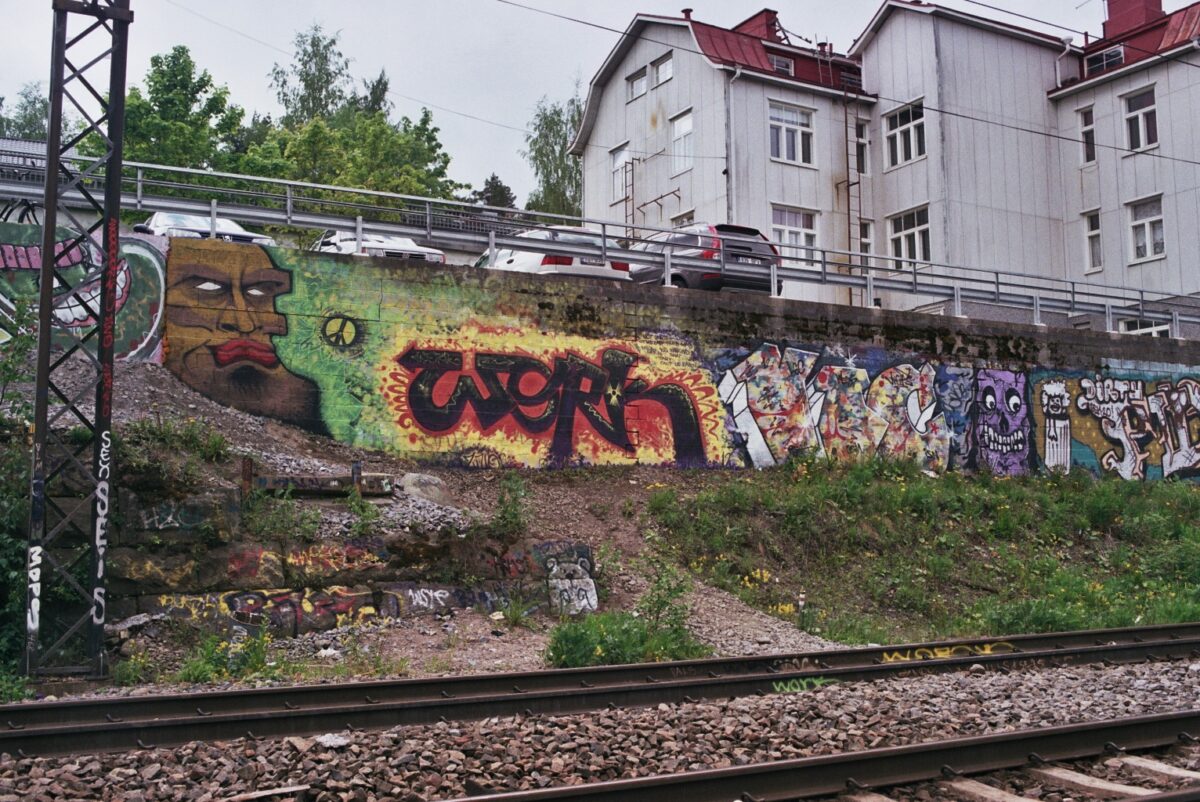
The graffiti wall in Suvilahti reflects the shift in Helsinki’s graffiti policy following the “Stop Töhry” campaign. After the zero-tolerance policy ended in 2008, the city gradually began to provide authorized painting sites, and the graffiti wall in Suvilahti was opened to the public in 2009. The photo shows how graffiti has evolved from a nuisance to be removed into an accepted form of urban culture and visual expression.