
Sakari's Sweater Game
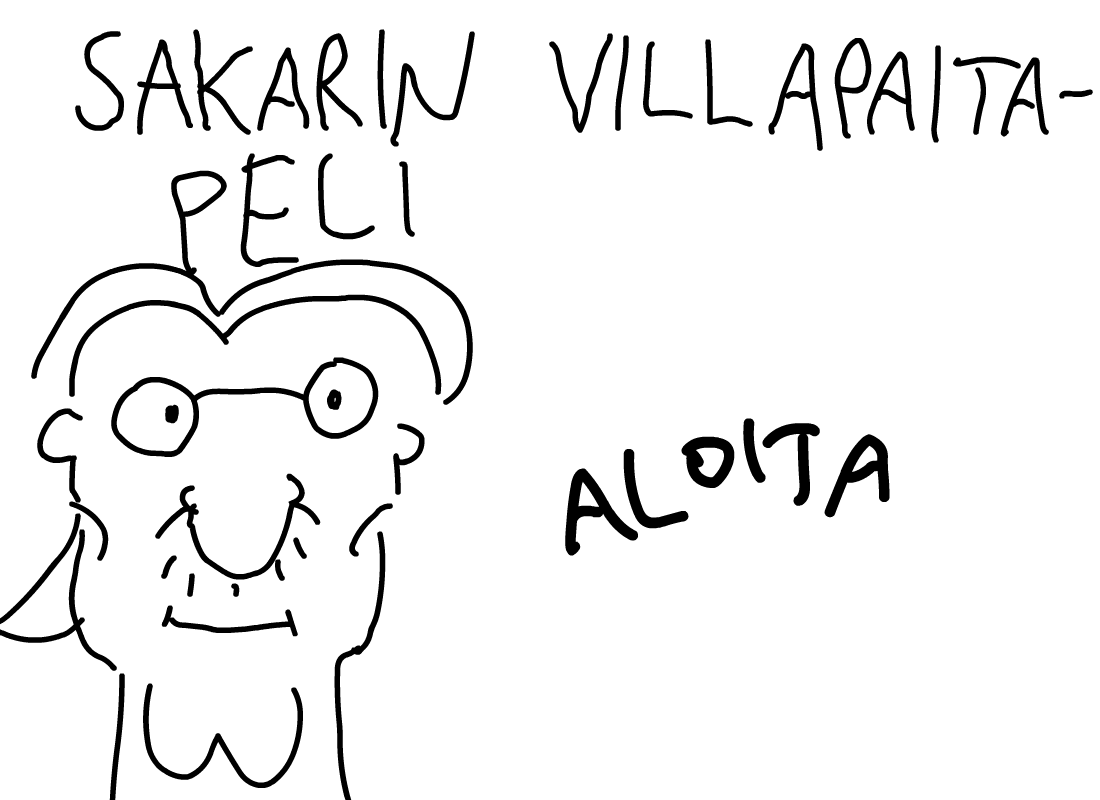
One of the most memorable small viral phenomena of the Finnish Flash era was Sakari’s Sweater Game. Game developer Mikko Alenius explains that the project wasn’t intended for the general public. The original goal was mainly to entertain his own circle of friends—and Sakari in particular.
Sakari was a friend from Alenius’s middle school days who often became the subject of sketches at get-togethers thanks to his easily caricatured features. At some point, the character was given a green sweater. Even though the real Sakari never wore one, the idea stuck.

The game was built using Adobe Flash, which was one of the most important tools for creative internet enthusiasts in the 2000s. Flash was used to create animations, games, and interactive web content in the era before social media took on its current form.
For Alenius, Flash was first and foremost a platform for experimentation: quick animations, small humorous projects, and personal experiments with no professional ambitions. It was precisely this kind of amateur culture that gave rise to Sakari’s Sweater Game.
In the 2000s, dress-up games aimed specifically at young people were extremely popular online. Players would drag clothes onto a character using the mouse to create different outfits. Sakari’s Sweater Game was partly a parody of this format.
The game was released on Alenius's website on August 29, 2008. At first, the link was shared only with friends and a few online acquaintances. After that, the game began to spread rapidly across the Finnish internet, particularly through the Pelikone.fi website. It eventually garnered over a million views.
Its popularity gave rise to, among other things, clone games, unofficial sequels, memes, and discussions on Finnish message boards.
Although the game was technically very basic, it became a part of Finnish internet culture in the 2000s. Its popularity showed that sometimes the simplest ideas are the ones that stick with people the longest.