

Siida Sámi Museum
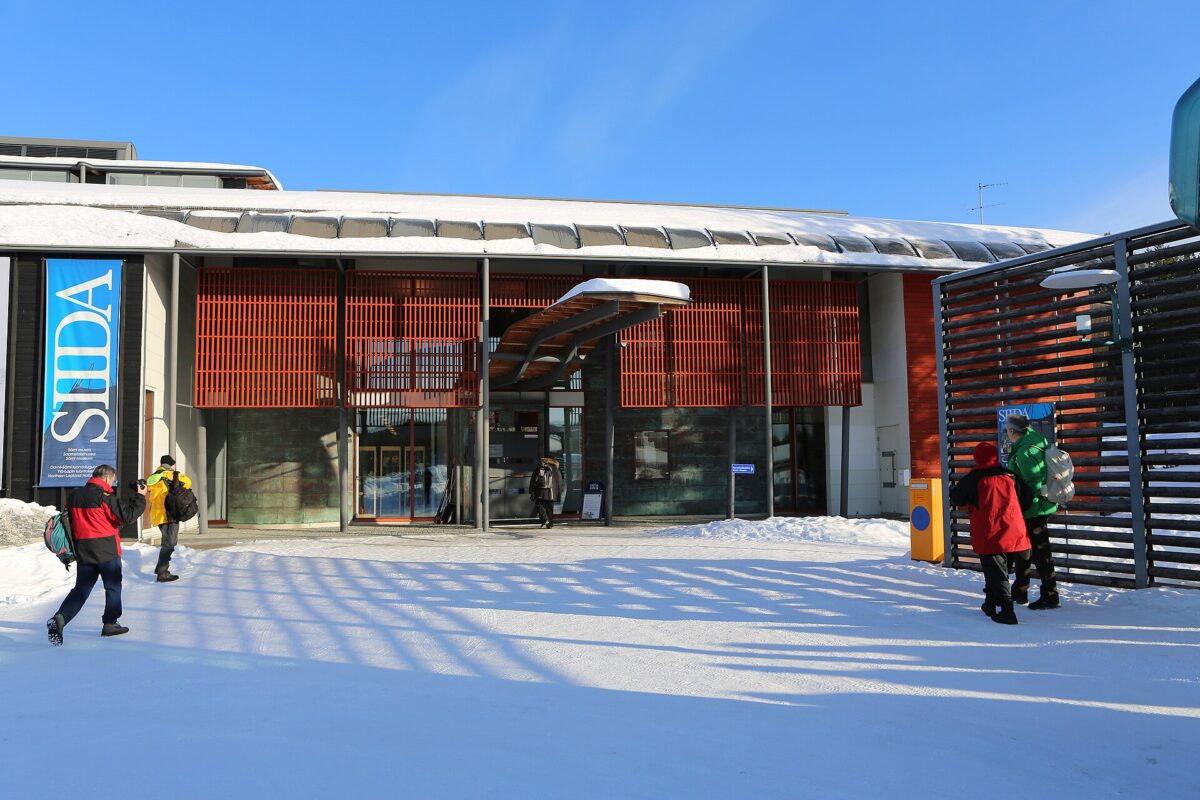
Siida is located in the village of Inari, near Lake Inari and the Juutuanjoki River. It serves as the home of both the Sámi Museum and the Upper Lapland Nature Center. The Sámi Museum was founded in 1959 on the initiative of Sámi Litto ry, and the first buildings of its open-air museum were moved to the current museum site in 1960. The Sámi Museum in Inari opened to the public in the summer of 1963 as the first independent Sámi museum in the Nordic countries. The current Siida building opened in 1998.
Siida’s mission is not merely to display artifacts, but to preserve and promote the material and spiritual culture of the Finnish Sámi people. The museum serves as the national museum of responsibility for Sámi culture and as the regional museum of responsibility for matters related to the cultural environments of the Sámi homeland.
The building was designed by Juhani Pallasmaa. Siida’s architecture is characterized by a low profile, a form that blends into the landscape, a curved roof, a long skylight, and a combination of concrete, steel, and wood. The building is two stories tall and covers approximately 2,800 square meters, of which about 1,100 square meters is exhibition space.
Siida was renovated and expanded between 2020 and 2022. The renovation involved building new facilities, improving the storage of the collections, and updating the museum and nature center spaces to meet current needs. The new main exhibition brings Sámi culture and northern nature together into a single cohesive whole.
Today, Siida also includes an open-air museum featuring nearly 50 historic buildings and structures along an approximately 800-meter-long trail. These showcase the architectural heritage and traditional livelihoods of Finland’s three Sámi cultures. In 2024, Siida was selected as the winner of the European Museum of the Year Award.