

Rattan and the Handicraft Tradition of the Visually Impaired in Finland
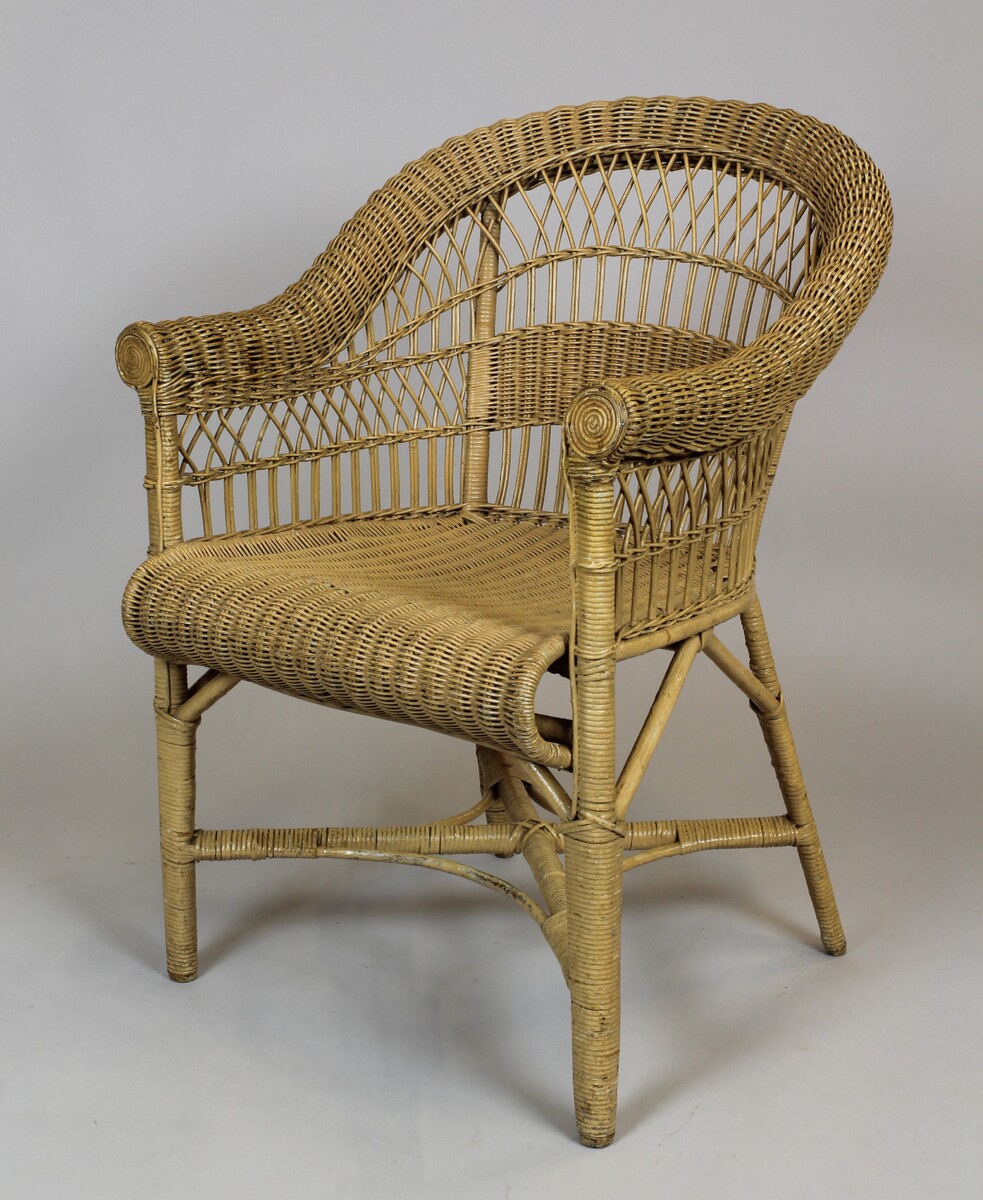
In Finland, rattan is commonly found in baskets, chairs, woven furniture, and rug fringes. The material is not native to Finland; rather, it is obtained from rattan palms of the Calamus genus that grow in tropical rainforest regions. The rattan used in Finland comes largely from Indonesia, which, according to the Association of Visually Impaired Craftsmen, produces 80–90 percent of the world’s raw rattan.
In the history of Finnish crafts, rattan is closely associated with basket weaving and furniture. The collections of the Helsinki City Museum include, for example, a rattan and bamboo chair dating from the 1890s and a hand-woven rattan basket dating from 1880–1905. These items show that rattan was already in use in Finnish homes by the late 19th century.
In the craft tradition of the visually impaired, rattan work holds a special place. According to research on crafts made by the visually impaired, brush-making, basket-weaving, and weaving were the most common crafts practiced by blind people in Finland during the 20th century. Crafts served both as a means of livelihood and as a way to maintain professional skills in a situation where other job opportunities were scarce.
One of the early pioneers in combining rattan craftsmanship with the work of visually impaired artisans was Viktor Julius von Wright. He studied basket weaving in Germany in 1873 and brought techniques, tools, and raw materials back to Finland. In 1879, he founded a wicker and rattan goods store in Helsinki, where visually impaired craftspeople also worked. The store operated until 1929.
In 1955, the Finnish Federation of the Blind established SOKEVA to support handicraft production, the supply of raw materials, and the sale of products by people with visual impairments. Later, Sokeva Käsityö supported, guided, and advised craftspeople and supplied materials. These activities changed significantly in the 2010s, when funding for Sokeva Käsityö ended in 2014 and the Arla Institute’s traditional handicraft instruction program ended in 2015.
Today, this tradition is kept alive by organizations such as the Association of Visually Impaired Craftsmen. The association promotes the tradition of handicrafts and hands-on work among the visually impaired, organizes courses, and compiles instructions for rattan and willow work, for example. Rattan is an interesting material in this tradition precisely because working with it relies heavily on the sense of touch: soaking, bending, the tension of the weave, and recognizing the resistance of the material.