On the Nature of Stage Poetry and Finnish History
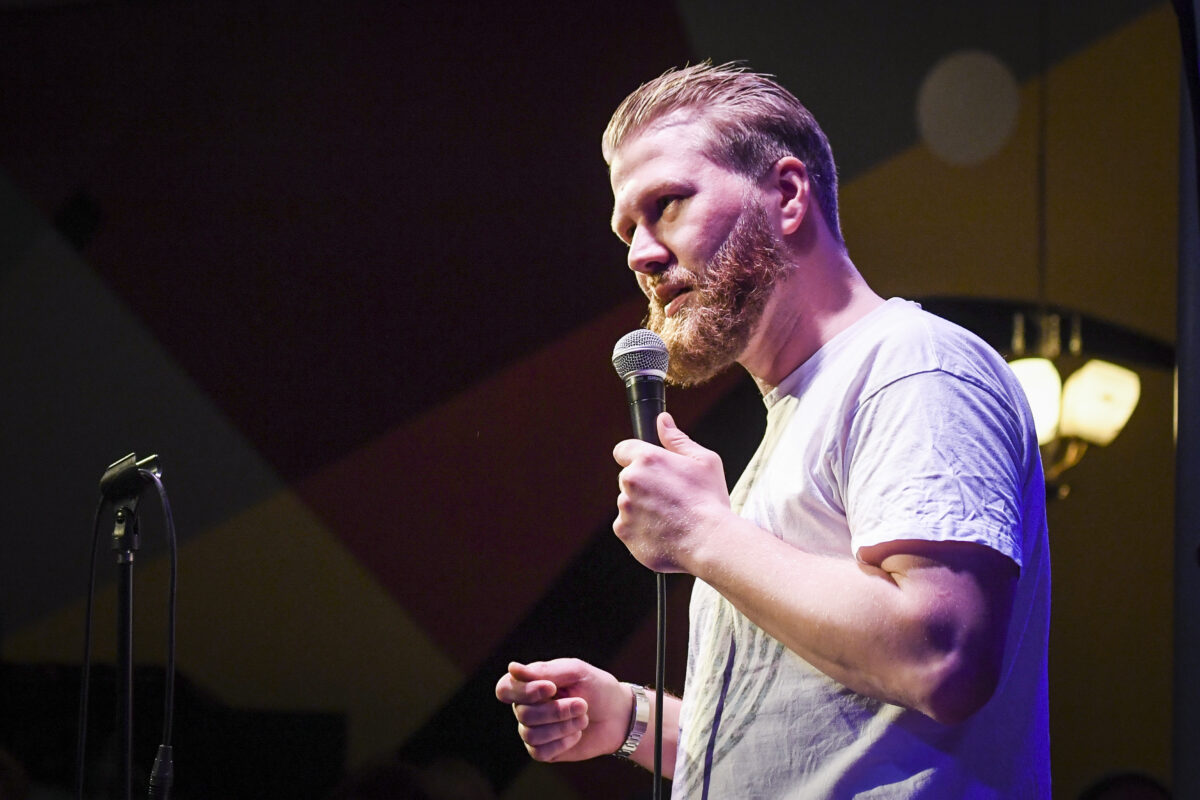
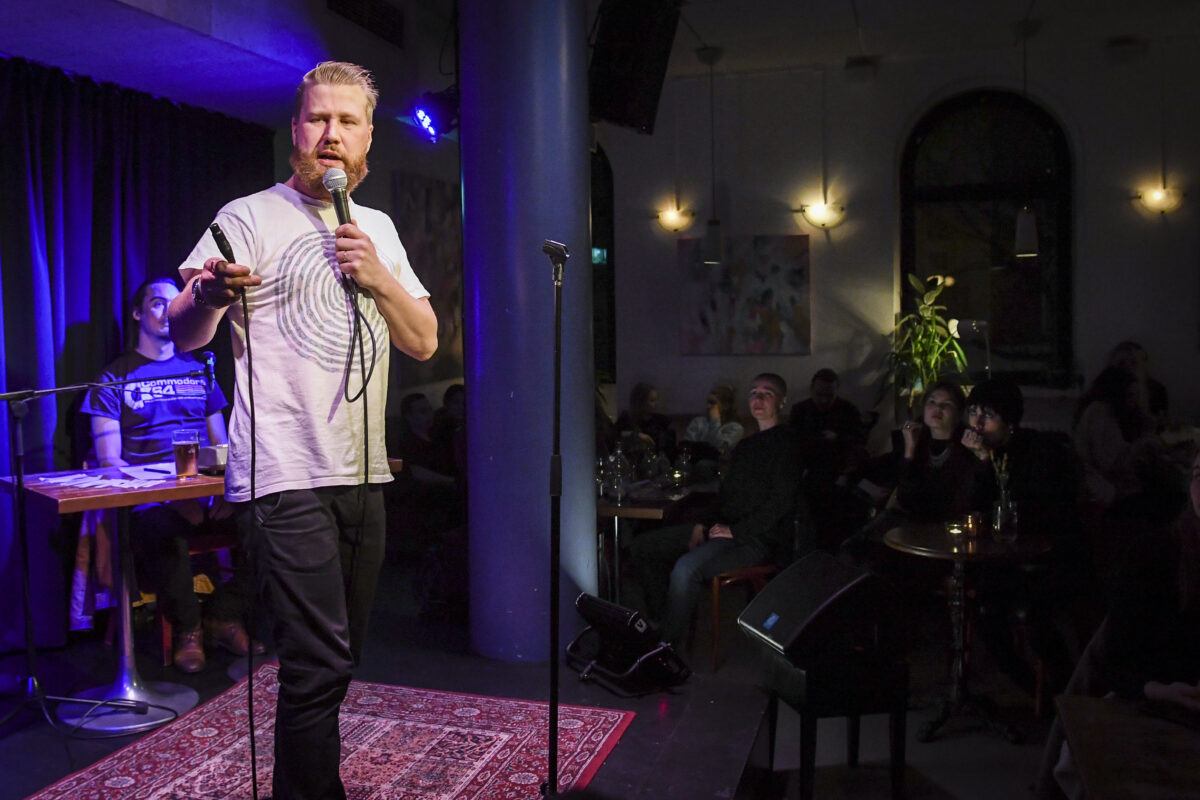
One characteristic of spoken word poetry is its ability to evade precise definitions. Probably simply because precise definitions generally don’t serve the purpose of spoken word poetry. One could even think of spoken word poetry as more of a culture than a specific way of writing or performing poetry. Spoken word poetry is about community, listening, respect, and also taking up one’s own space—it’s about courage.
The texts performed in spoken word poetry are almost always original works. So no Eino Leino, Edith Södergran, or other classic material. New classics are born within the spoken word poetry scene as nervous first-timers perform their texts alongside seasoned veterans. Everyone is welcome, regardless of age, language, or writing background!
The roots of spoken word poetry go back to ancient times, as people have always gathered to listen to poems and songs. The printed word, after all, is a relatively new phenomenon. In spoken word, people perform their own texts, which may be social commentary, blunt, narrative, humorous, personal, diary-like, experimental, performative—almost anything. On spoken word stages, people rap and perform texts in the spirit of spoken word; its roots can be found in both beat poetry and hip-hop culture. At the same time, behind it all lies a desire to be heard, a desire to share something of oneself and to receive encouragement.
In Finland, spoken word poetry could be said to have existed in some form since the 1960s. Perhaps the key point is that spoken word poets (at least generally) also pay attention to their use of voice and their stage presence. Sometimes professionals may have long, carefully crafted performances that may also include music and soundscapes, or even a live orchestra. The performances may also address a specific theme.
In Finland, spoken word poetry began to flourish in the 1990s, when the poetry scene in Turku was particularly vibrant. This group of young poets at the time presented their work in novel settings, sometimes with a rather bold and even surprising approach. Poetry was taken to where the people were: to bars, festivals, and other—at the time still unusual—poetry stages.
At the same time, poetry slam also made its way to Finland. This is a lighthearted competitive form of spoken word poetry that originated in the United States in the 1980s, in which poets perform their own works, which are then scored by a five-member panel of judges selected from the audience. Performances are rated on a scale of 1 to 10, usually to one decimal place. There are traditionally three rounds, and naturally, only one poet can win the competition.
The winner may be rewarded with fame and glory—such as the title of Finnish champion or even Rovaniemi champion—but sometimes cash prizes are also on offer, as is the case in Helsinki at the Korjaamo Poetry Slam club organized by Harri Hertell. There, the audience donates money to the winner’s pot, and at the end of the evening, it’s revealed who gets the night’s prize money.
You can find more information about Finland’s only regular poetry slam club here.