
Kierikki, Yli-Ii / Oulu
Kierikki is located in Yli-Ii, Oulu, on the north bank of the Iijoki River, in the heart of a vast Stone Age settlement area. The site is one of Finland’s most significant archaeological sites, and its discoveries have transformed our understanding of the Stone Age in Northern Finland. Previously, Stone Age people were often thought of as nomadic hunter-gatherers, but research at Kierikki has revealed a picture of large, more permanently settled riverside villages.
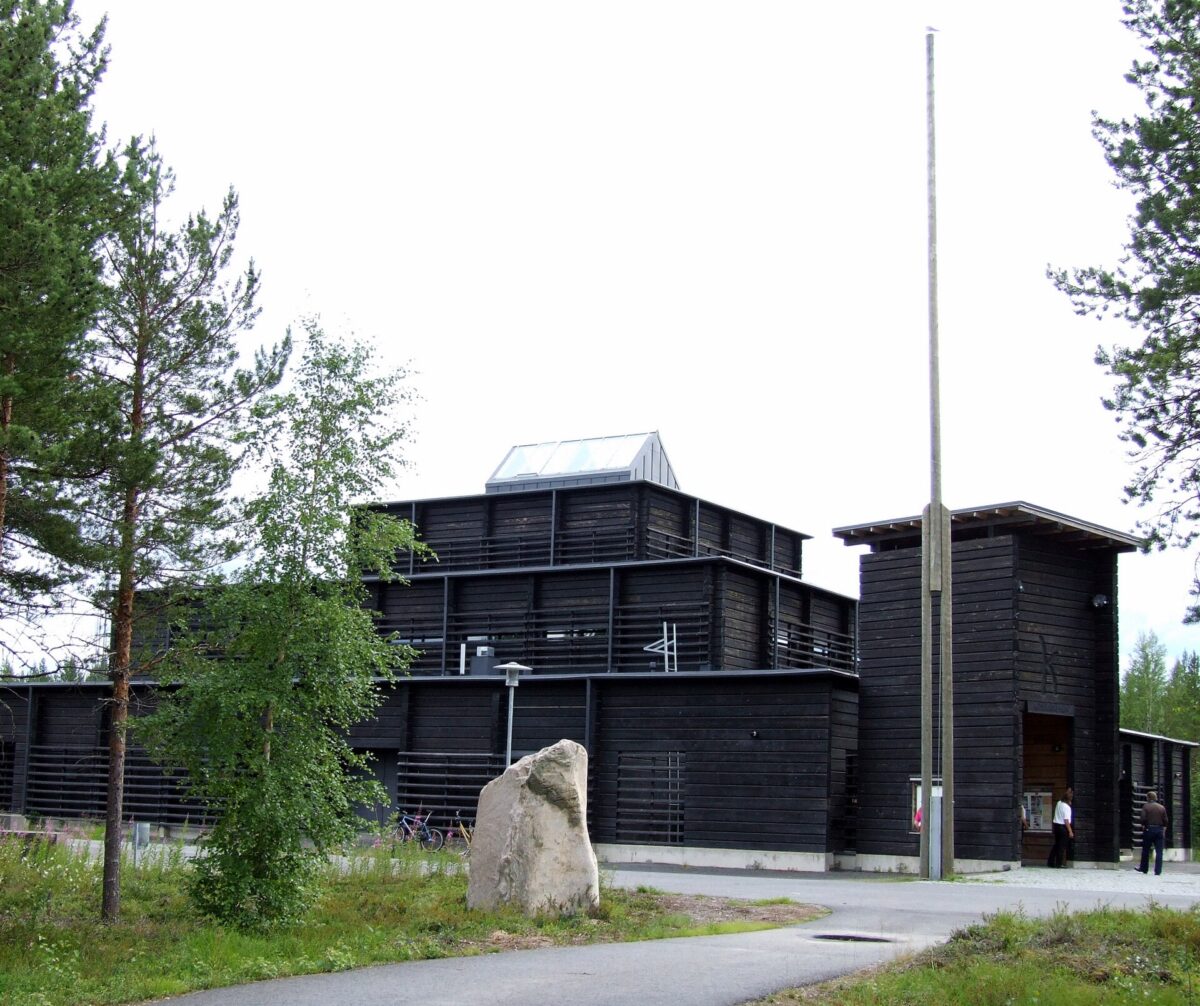
The Kierikki Center opened to the public in 2001. Its main building was designed by architect Reijo Jallinoja, and the structure is known as one of the largest modern log buildings in the Nordic countries. The European Heritage Awards has also described it as Europe’s largest modern log building. The building gained international attention precisely because it combines contemporary architecture, timber construction, and an archaeological setting.
What is interesting about Kierikki’s architecture is its relationship to the subject: the building does not imitate the Stone Age, but serves as a contemporary interpretation of a place whose history stretches back thousands of years. The massive log structure places the building within the continuum of Finnish timber construction, yet the result is a modern science and museum center.
One of the most interesting aspects of Kierikki’s ancient history concerns the materials found there. Artifacts containing amber, flint, red shale, and asbestos—substances that do not occur naturally in the Kierikki area—have been discovered in the region. This suggests that the people of the area had connections elsewhere. According to Kierikki’s own background information, sealskins and seal blubber were valuable trade goods that could be exchanged for flint from the White Sea region and amber jewelry from the Baltic Sea area. This makes Kierikki interesting from a design perspective as well: even in the Stone Age, the origin of materials, the form of objects, and craftsmanship had cultural significance. It was not just about survival, but also about objects, trade, and relationships between communities.
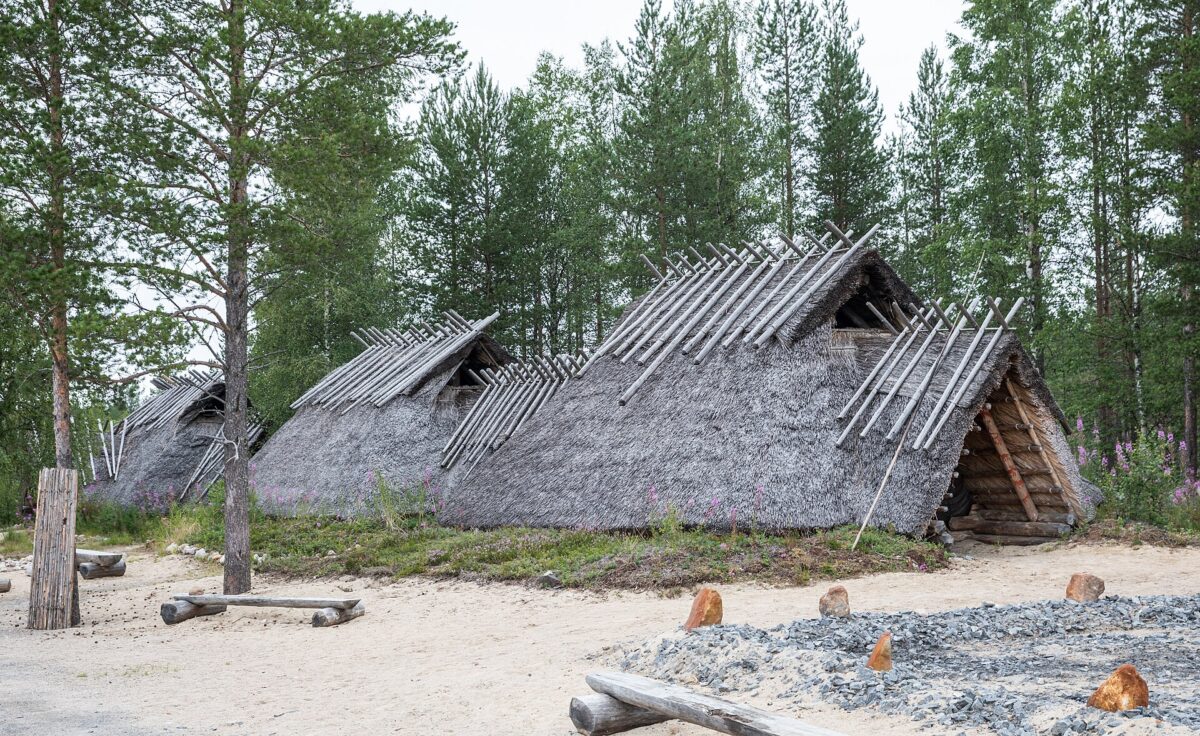
Today, Kierikki serves as a science center and archaeological center focused on the Stone Age. It features an archaeological exhibition, a Stone Age village, a nature trail, guided tours, and hands-on activities such as archery and stone tool making. In other words, the site doesn’t just present the Stone Age through display cases, but creates an experience where research, architecture, and the environment work together.