

The Pinecone Cow and Instructions
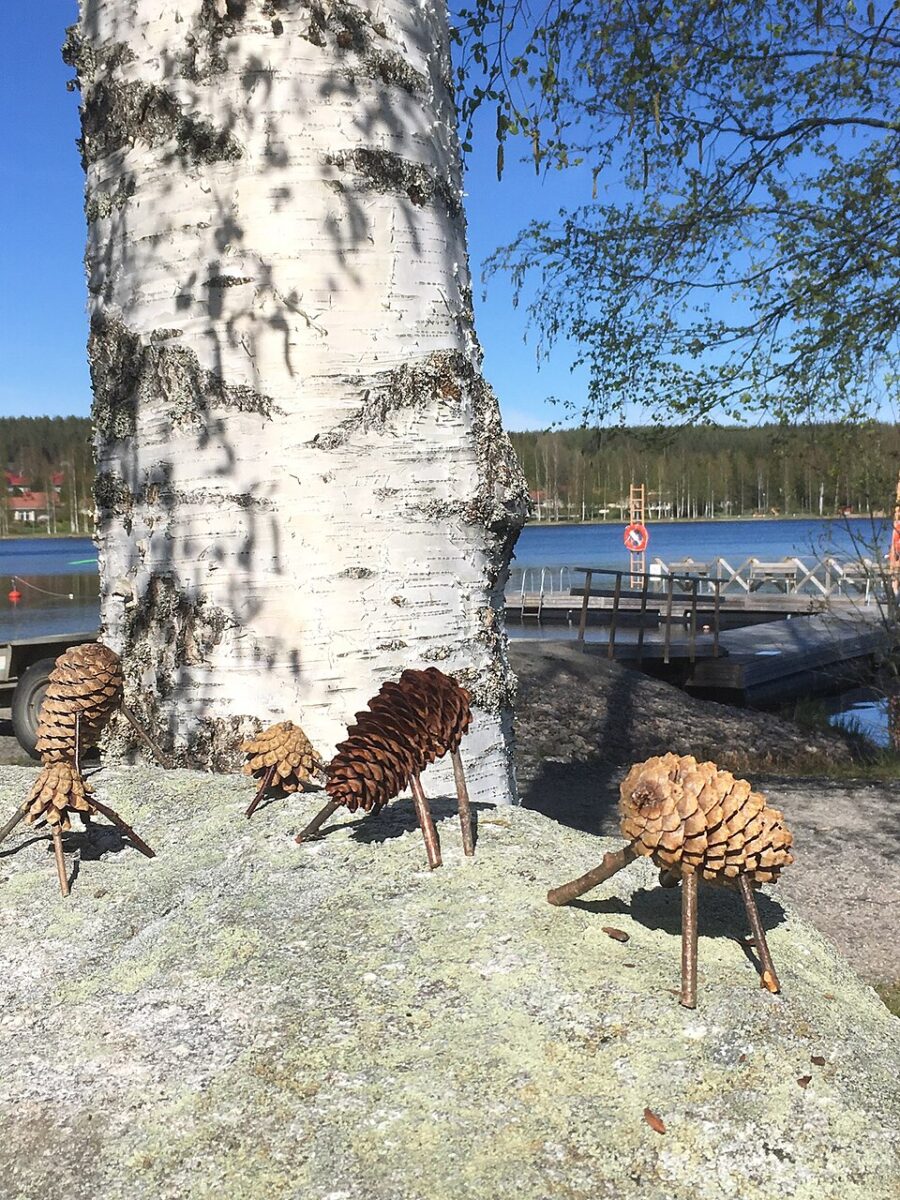
A pinecone cow is a traditional homemade children’s toy made by shaping a pinecone into a cow or other farm animal. Usually, a spruce cone is used as the body, to which sticks are attached to form the legs, horns, tail, or ears. An entire farm can also be built around the toy: fences made of branches, feeding troughs made of stones, and hay for the animals.
The exact origins of the pinecone cow cannot be pinpointed, as it is part of everyday play traditions rather than the history of industrial toys. Its history is linked to a time when children made their own toys from materials found in their immediate surroundings. When ready-made toys were scarce, pinecones, sticks, bark, stones, and leaves were transformed into animals, buildings, and everyday objects during play. Suomen Luonto sums up the tradition well: before factory-made toys, toys were made from objects found in nature, and elongated spruce cones served as horses, cows, or oxen. Smaller cones could be calves, pine cones were sheep, and green summer cones were lambs.
The pinecone cow is also an example of how children imitate the adult world. The National Museum of Finland’s collections include pinecone cows and pinecone sheep from Muurla dating from 1912–1914. The collection description notes that the scales of the spruce cones were bent outward to make the animals’ fur appear fluffier. The same collection information describes pinecone cows and sheep as a typical game in which children gathered a herd of reindeer and built enclosures for them.
Culturally, the pine cone cow has been preserved through memories, children’s literature, and nature education. Mysi Lahtinen and Kristiina Louhe’s children’s book How the Pine Cone Cow Shoots was published in 2007, and its themes are listed in libraries as including nature, summer activities, islands, games, and outdoor play. In contemporary culture, the cone cow has also taken on new forms: in Utajärvi, along Highway 22, there is a public artwork The Pinecone Cows of Utajärvi, whose concept is linked to the local tradition of shingle roofs and tar, as well as the history of agriculture.
With the Pinecone Cow, ordinary natural materials are transformed through imagination into an animal, a herd, or an entire farmyard. An elongated spruce cone can be a cow, a rounder pine cone a sheep, and small pinecones calves. At the same time, children learn to observe shape, scale, balance, and material through hands-on experience. The pinecone cow is not just a single toy, but part of a tradition in which the forest, yard, and beach have served as children’s own building and play environments.
Tinkering and crafting with natural materials, such as making pinecone cows and bark boats, has been a central part of Finnish childhood, cottage life, and the relationship with nature. Play taught children how to make use of natural materials and fostered creativity at a time when toys were not necessarily bought ready-made from a store.
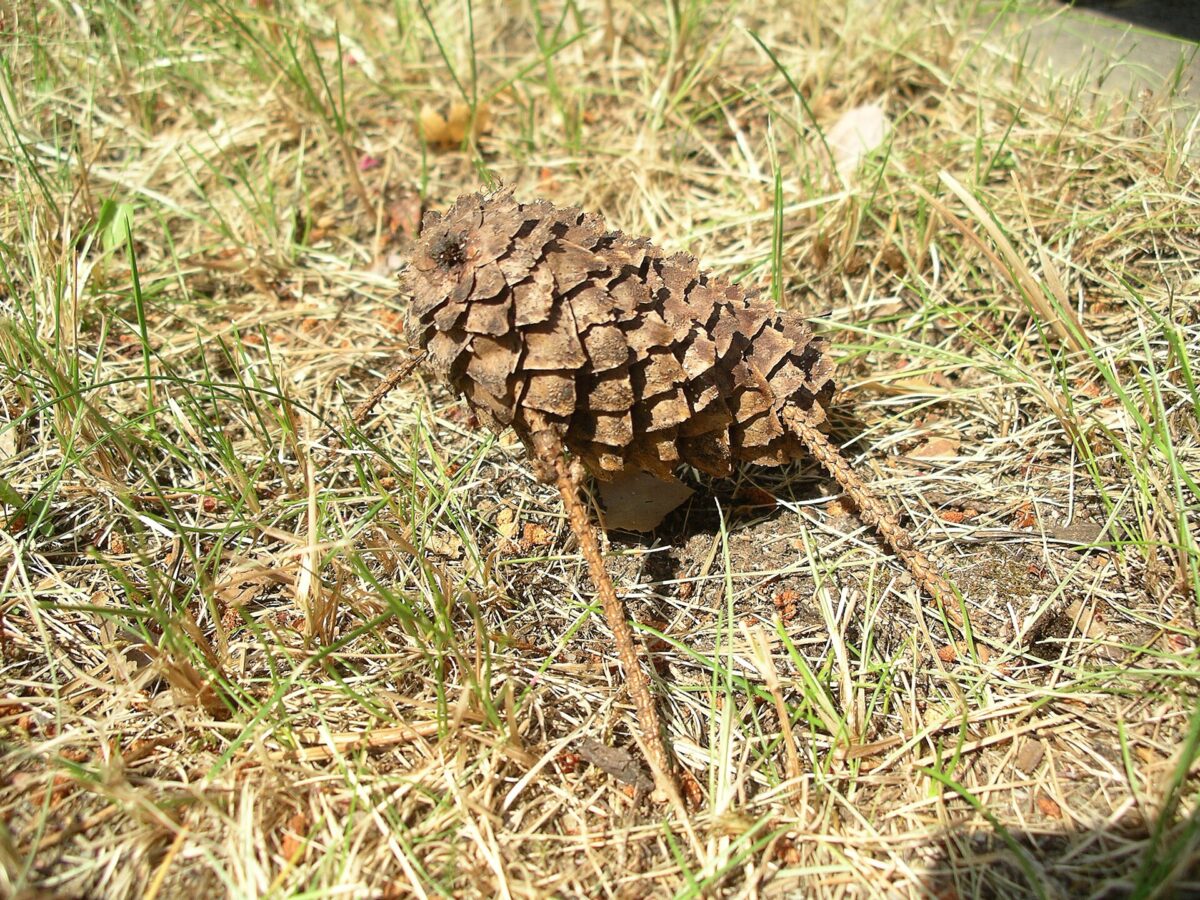
Instructions
Supplies:
fresh pine cones, small twigs or sticks, leaves, grass, stones, bark, and, if necessary, a small knife or scissors for an adult to use.
- Choose a suitable pinecone.
An elongated spruce cone works well as a cow. You can make a sheep out of a pine cone, and calves or other animals out of small birch cones. - Make the legs.
Cut four sticks of roughly the same length. Insert them between the scales of the body so that the animal stands as steadily as possible. - Add the antlers and tail.
You can stick small twigs into the front of the log to make antlers and into the back to make a tail. You can use small leaves for ears. - Build the environment.
Make fences out of branches, border the yard with stones, and add hay or grass for the animals to eat. You can turn the play area into a whole pinecone farm. - Use natural materials responsibly.
Collect pinecones, twigs, and leaves you find on the ground. There’s no need to tear anything from living trees.