
From Cabbage to Book
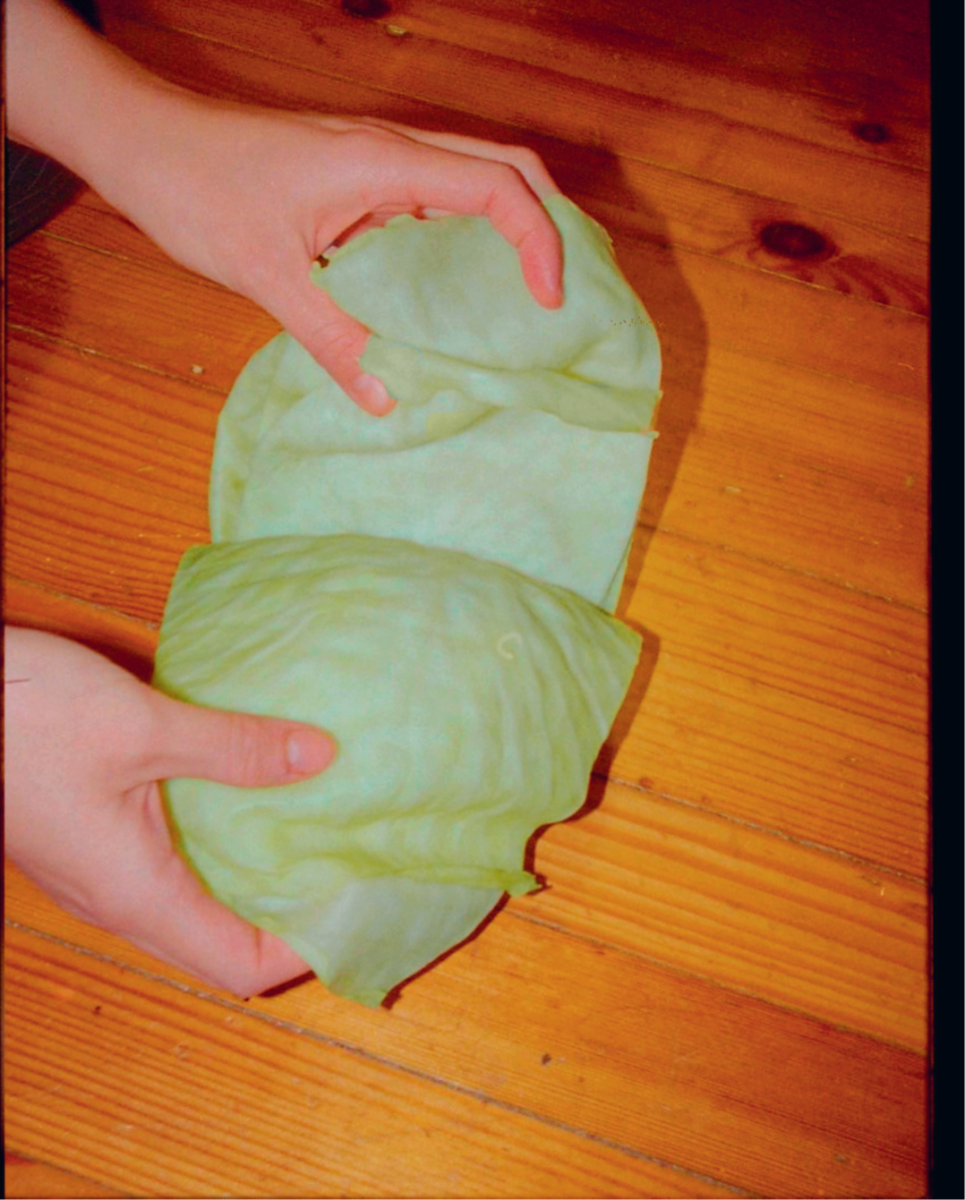
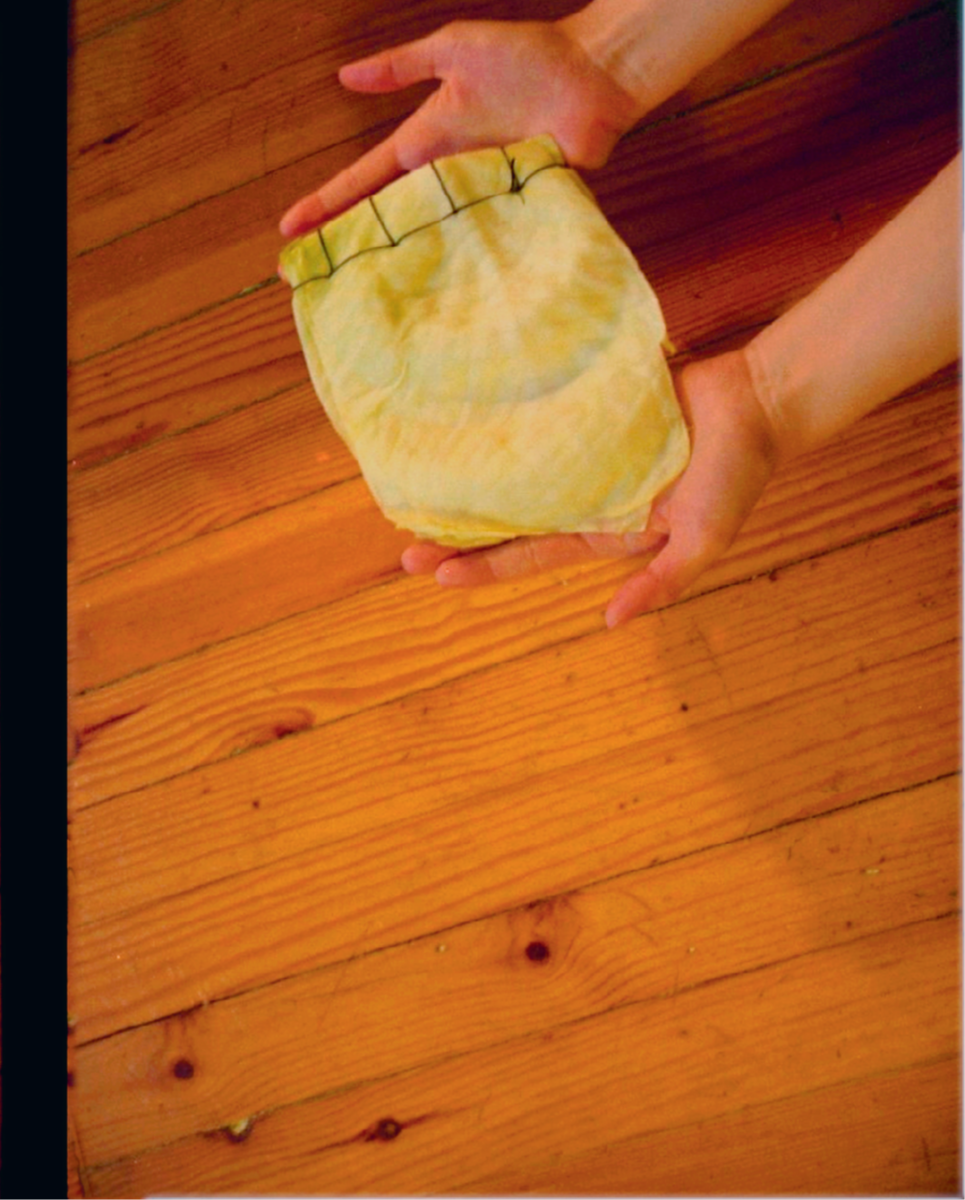
What is the nature of the artist’s book—a genre that thrives in the exciting borderlands between literature and the visual arts, yet is difficult to define exhaustively? And how can one read a cabbage? This text is an excerpt from Anna Kallio’s essay “Kansistaan karkaava,” which appeared in the literature magazine Nuoren Voiman Kirja (Issue 1/2024). For the essay, Kallio bound a book from cabbage leaves that engaged in a dialogue with Artur Barrio’s Livro de Carne, made of meat.
When I first saw Artur Barrio’s (b. 1945) *Livro de Carne* (1978–1979) in a university literature course, I was both captivated and repulsed. Barrio’s art aims to provoke and elicit strong reactions. The Book of Flesh consists of rectangular slices of meat sewn together. Only photographs of it remain; the organic part has long since rotted away.
Born in Portugal, Barrio lived and worked as an artist in Brazil during the military dictatorship
. Livro de Carne is particularly powerful when one is familiar with its context. Trash, bodily secretions, and items such as toilet paper were among the cheap and disposable materials used in Barrio’s art, which was interpreted as highly political. Livro de Carne is filled with connotations of violence.
In addition to its political dimensions, Barrion’s *Livro de Carnea* invites us to view and interpret it from a material perspective. In doing so, it begins to raise different kinds of questions. What does it mean to “read” an animal?
The crafter’s hands are starting to itch. The cabbage book nods to the meat book like a distant acquaintance, but unlike the Livro de Carne, it won’t rot away in a matter of moments. After the photo shoot, the cabbage book was moved to the refrigerator. Next, it will get to soak in the fermentation bucket.
Anna Kallio is a writer and critic.