Random Thoughts
On a cosmic scale, art is fleeting. Poets often believe in empty promises that art is eternal. Language is a marvelous substance that moves nimbly between worlds, and it’s wonderful if one can somehow convey this feeling in prose. For example, a lens always offers a certain perspective and framing that language lacks entirely.
I realized that I shouldn’t hide behind theories but trust myself. It was very liberating. After all, we don’t read to become smart, but because it stirs our emotions. It’s about living.
I have always been drawn to books—they are like magical objects that have become part of my identity. Libidinal energy wages a constant war against the subject matter of the work . The eroticism of destruction is a very linguistic matter. As a reader, I am also drawn to texts whose language conveys a strong, all-pervading desire.
On the other hand, a book is more than just an object. The cosmos itself is a kind of book that constantly feeds us information. For example, we can “read” information from the sky by observing distant constellations and ask ourselves: what kind of information might they contain? Could our civilization evolve to the point where it would be possible to write a poem on the night sky? The idea may be far-fetched, but the point is that it is conceivable.
Fortunately, there is—and always will be—plenty of literature that contains no sex at all. So go ahead and dive into Jane Austen’s works, which lack sex scenes but feature highly suspenseful, emotionally charged romantic relationships. And if you prefer, you can also read the pornographic works of the pseudonymous author Golden Angel, which depict BDSM sex set in an Austen-esque world.
You have to see—not through someone else’s eyes—but in a way that allows you to truly see, and then write like a small animal. A small animal moves at ground level, where there’s soil and smells and all that, and all of it is physically very close. The writer must be that close and that physical. I am uncompromising when it comes to artistic freedom. And for me, prose is a place of extreme freedom.
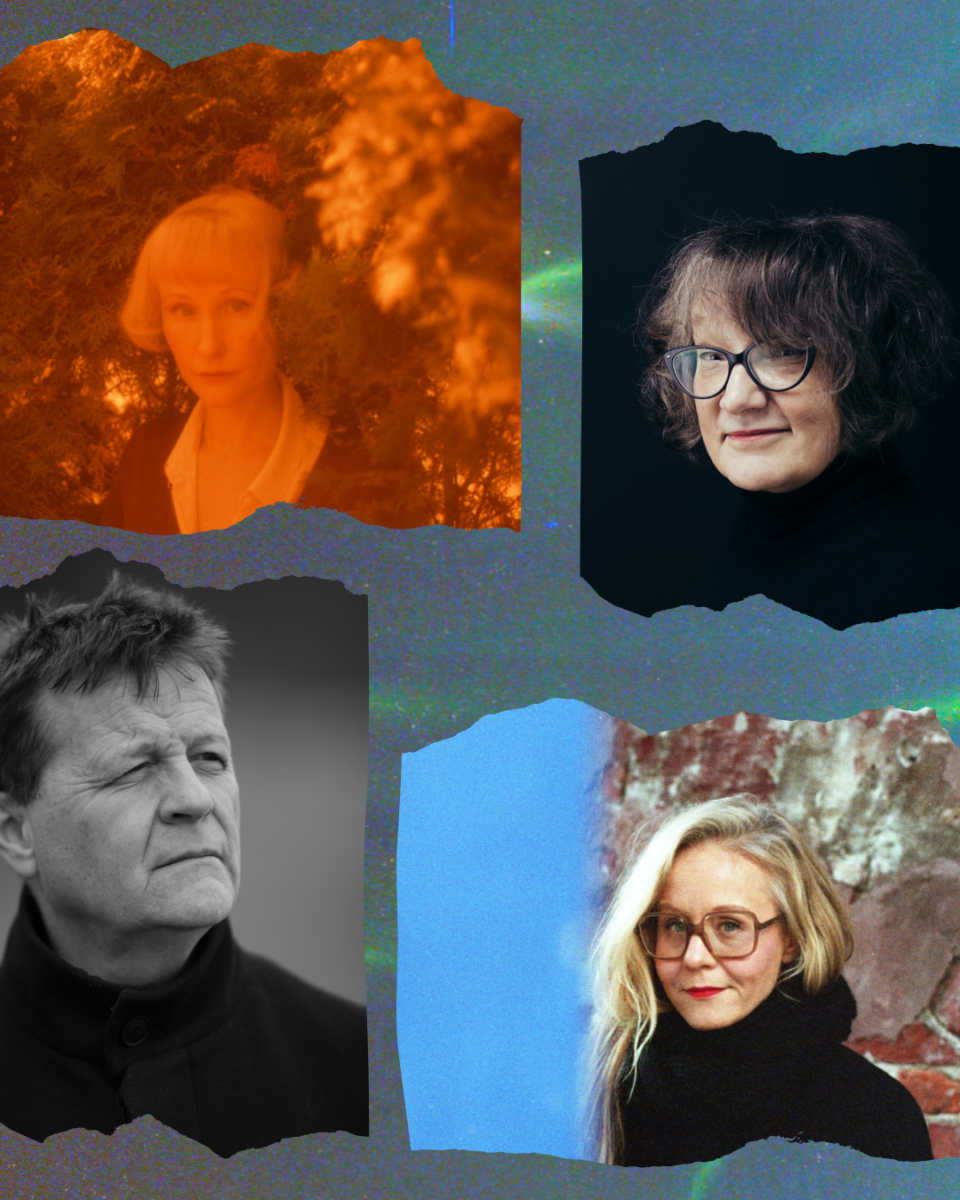
Nuori Voima is Finland’s oldest literary culture magazine, which identifies the trends and phenomena of our time and expertly contextualizes them within a timeless framework. The text above is a collage of Revolveri interviews from the 2025 issues, in which writers and other literary artists get to delve into the heart of literature.
The interviewees were Anna-Kaari Hakkarainen, Iida Rauma, Monika Fagerholm, and Christian Bök. The collage was compiled by Otso Venho and Telma Peura.
Read the full interviews on the Nuoren Voima website via the link below.