

TICKET KIOSKS IN HELSINKI
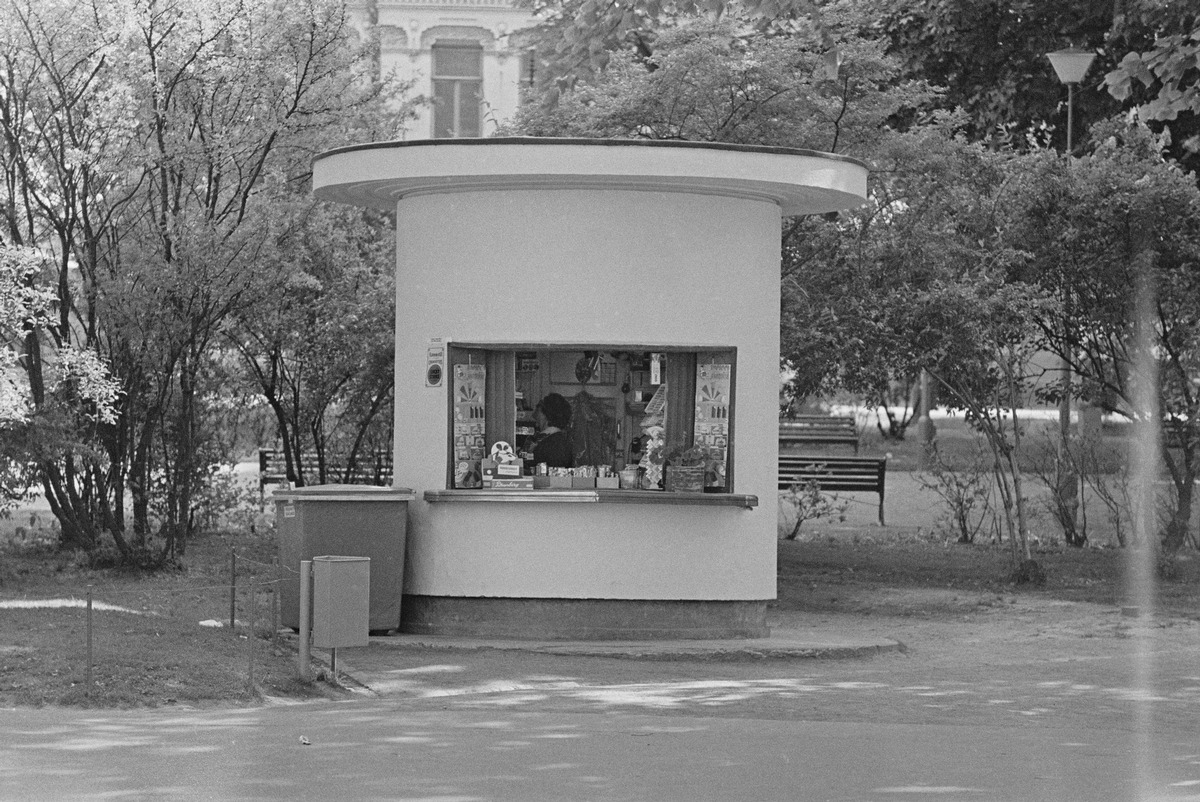
Helsinki’s ticket kiosks are a type of kiosk that emerged in the late 1930s and were designed for the sale of candy and soft drinks. They are particularly linked to the history of the city’s public transportation, parks, and streetscape. The kiosks were built in locations where people passed through daily: at the terminal stops of tram and bus lines, in public squares, and along the edges of parks.
The first wooden ticket kiosks with curved front walls were designed in 1937 by Gunnar Taucher and Eero Urpola. In 1938, the standard drawings for Taucher’s curved-wall kiosk were published in the magazine *Arkkitehti*. Later, more angular kiosks with canopies became common in Helsinki, particularly those built in the 1940s and 1950s. Many of today’s angular ticket kiosks are based on drawings signed by City Architect Hilding Ekelund.
The ticket kiosk is small and practical in design. It is usually made of wood and rectangular in shape. The sales counter is located in the front section with a window, under the awning. There is a door at the back, and the interior is divided into a sales area and a storage area. The kiosk’s awning is the most recognizable feature of this type of building, but it also served a clear purpose: it protected customers and the sales window from the weather.
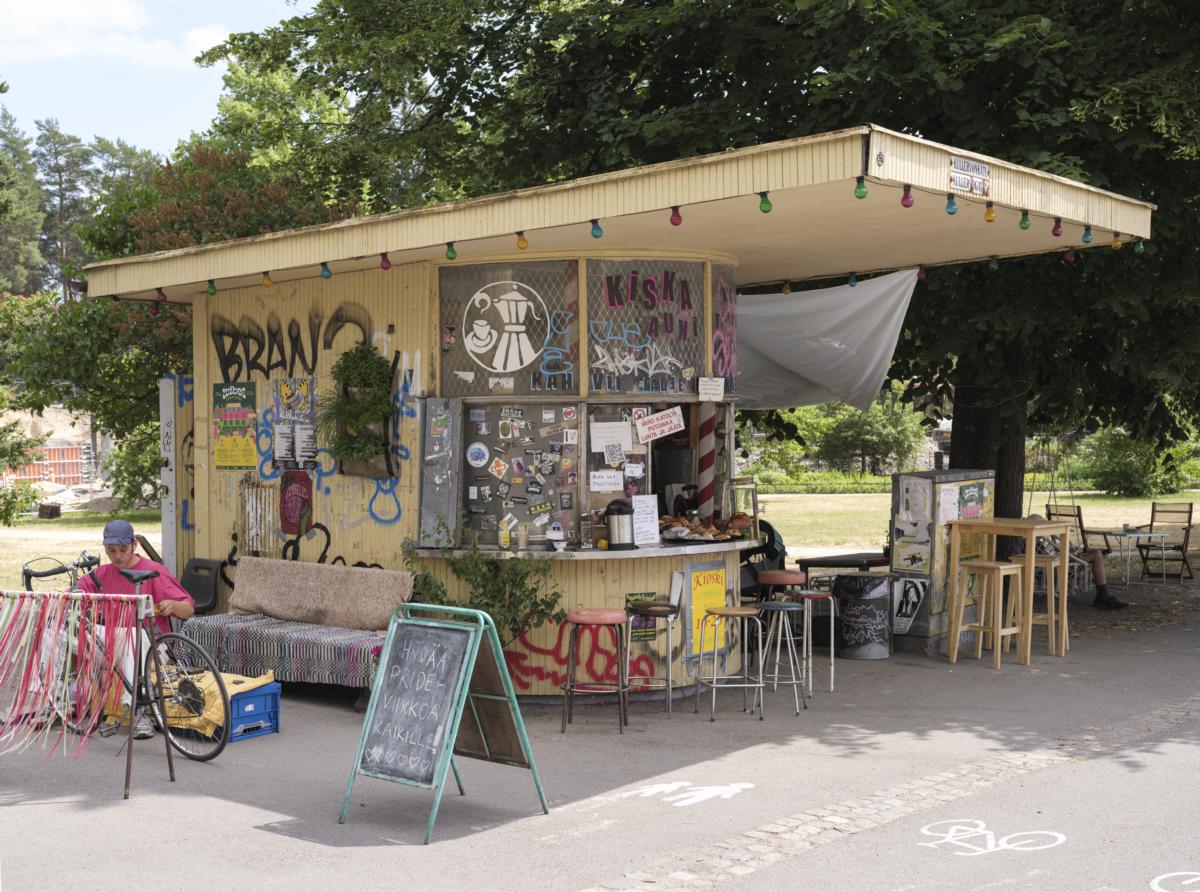
The original purpose of ticket kiosks changed in the late 20th century. Their popularity waned, particularly in the 1970s and 1980s, as the kiosk business shifted toward chains and year-round stores. In the 2000s, however, ticket kiosks have returned as a visible part of Helsinki’s summer season. The city leases kiosks to entrepreneurs, and some of the kiosks are privately owned.
As of 2026, the City of Helsinki owns 24 kiosk buildings, 18 of which are actual ticket kiosks. Most of them are in operation during the summer season, but not all kiosks are in use. Some are closed due to the need for renovation, their location, or other practical reasons.
The current ticket kiosks serve as cafés, food kiosks, wine bars, and event venues. Locations currently in use include the Käpylä kiosk in Meurman Park, the Brera kiosk in Eira Park, the Puukioski in Munkkiniemi on Laajalahti Square, the Piirakkaleipomo Räty kiosks on Pitkälläsilta and in Ruskeasuo, Il Becco in Tove Jansson Park, the Puolen hehtaarin kiosk in Linnankoskenpuisto, the Intiankatu kiosk in Arabianaukio, Jugge Bar in Johanneksenpuisto, Vegan Food Box on Museokatu, and VinoLippa in Liisanpuisto in Kruununhaka.
The ticket kiosks have been preserved because they have found a new purpose. This same type of structure first served as a soft drink and candy kiosk, and later as a café, a food stand, and a venue for neighborhood events. Their history also reflects the transformation of Helsinki’s everyday urban space: sales kiosks originally designed to be located near public transit stops and parks have become an integral part of the city’s current summer and food culture.