

Fanny Churberg
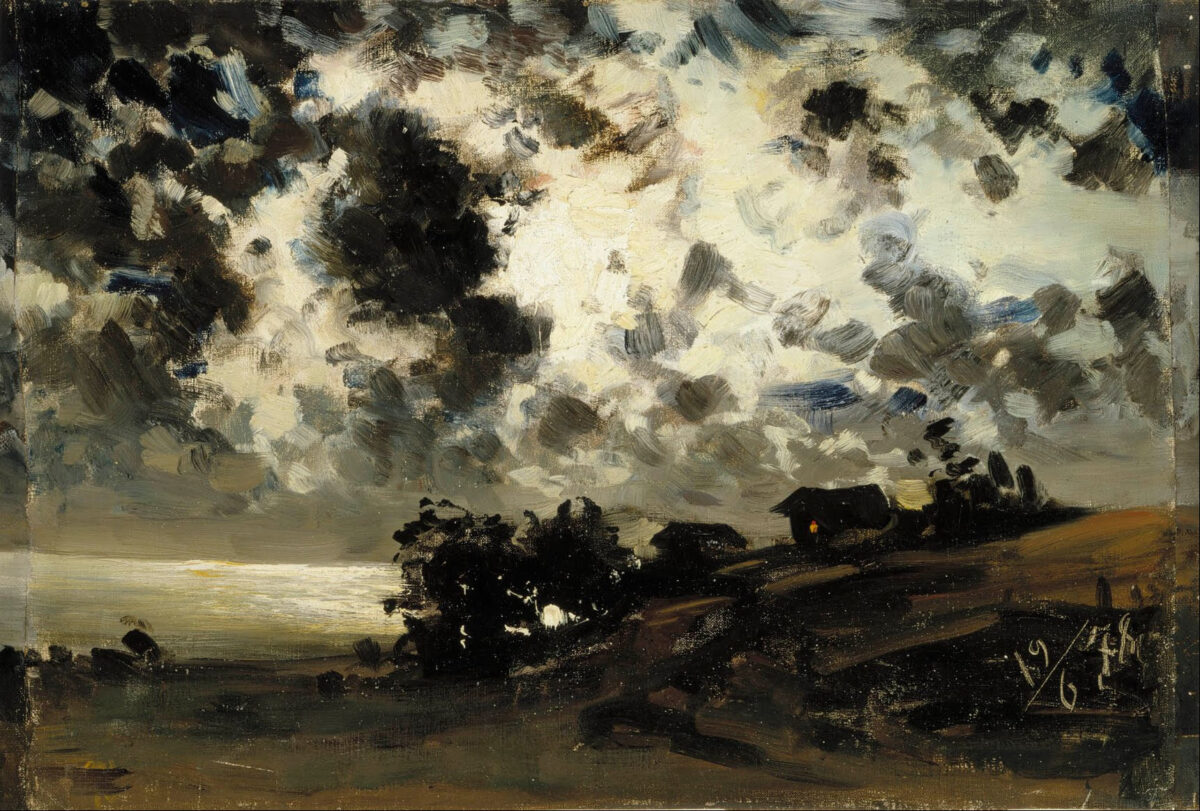
Fanny Churberg (1845–1892) was a Finnish landscape painter whose work stood out in 19th-century Finnish art for its exceptionally powerful expression. She was born in Vaasa, studied in Düsseldorf and Paris, among other places, and later became one of the most distinctive figures in Finnish landscape painting.
The landscapes of Churberg were not merely beautiful views of nature. He painted forests, cliffs, moonlit scenes, storms, winter landscapes, and waterfalls in a style that diverged from the restrained landscape ideals of his time. His brushstrokes were bold, his colors intense, and the atmosphere often restless or dramatic. In an interview with YLE, Mia Haltia, curator at the Turku Art Museum, explains that Churberg’s style of painting baffled the critics of his time and that his art was too idiosyncratic to be unreservedly accepted in his own era.
Churberg’s career was cut short. He stopped painting in the early 1880s, even though his artistic style had just begun to mature. One reason may have been the prevailing social climate: female artists were often viewed with suspicion, and powerful, ambitious landscape painting did not easily fit the role that was typically assigned to women in the art world. Her reputation did not truly grow until after her death.
Churberg’s significance is not limited to his paintings. He helped found the Friends of Finnish Crafts in 1879 and thus also influenced the development of Finnish crafts, textile art, and the national design language. This makes him an intriguing figure straddling the worlds of fine art and design history: Churberg not only painted Finnish landscapes but also helped shape the concept of a Finnish artistic craft tradition.
Today, we can view Churberg in a different light than people did in his own time. His works no longer seem like reckless failures, but rather modern and bold. He is a prime example of an artist who did not receive full recognition in his lifetime, but whose influence continues to shape Finnish visual art.